

MEET THE WILDLIFE OF MULL
Discover the wide variety of amazing species that live on and around the Isle of Mull
We have only included the main 'spotlight species' of Mull but of course all species are equally wonderful, so have a look at the full bird list for the island and their status - HERE


WHITE-TAILED EAGLE
The White-tailed Eagle often shortened to “sea eagle", is one of Mull's most iconic species. It is the UK’s largest bird of prey, with a wingspan that can exceed 2.4 metres, giving it an unmistakably powerful and commanding presence in the sky.
On Mull, White-tailed Eagles are most commonly seen along the coastline, sea lochs and nearby islands, where they hunt fish, seabirds and carrion. They are broad-winged and slow-flying, frequently gliding low over the water before dropping to snatch prey with their strong talons. Adults are easily recognized by their pale heads and distinctive wedge-shaped white tails, while younger birds are darker and take several years to reach full maturity.
Mull plays a vital role in the species’ recovery in Scotland following reintroduction efforts in the late 20th century. Today, the island supports a strong breeding population of 23 pairs and is considered one of the best places in the UK to see them in the wild. They can be observed throughout the year, with spring and early summer offering opportunities to witness courtship displays and nesting behaviour.
Seeing a white-tailed eagle soaring over Mull’s rugged coastline is a memorable experience and a powerful symbol of the island’s rich and thriving natural heritage.

GOLDEN EAGLE
The Golden Eagle is one of UK’s most impressive and evocative birds of prey, perfectly suited to Mull’s wild upland landscapes. Slightly smaller and more agile than the White-tailed Eagle, it is renowned for its speed, power and masterful flight, often seen soaring high above moorland and mountains on rising air currents.
Golden Eagles favour Mull’s interior hills, open glens and rugged ridges, where their prey consists of Rabbits, Hares, Red Grouse and Occasionally Ptarmigan. They are typically seen alone or in pairs, especially during the breeding season. Adults are dark brown with golden feathers on the back of the head and neck that glow in good light, while juveniles show striking white patches on the wings and at the base of the tail.
Mull has long been a stronghold for golden eagles, and the island’s relatively quiet, expansive landscapes provide ideal conditions for nesting and hunting. They can be seen throughout the year, but spring offers the best chance to observe spectacular aerial displays as pairs defend territories and strengthen their bonds.
Watching a golden eagle circle effortlessly above Mull’s hills is a powerful reminder of the island’s untamed character and its importance as a refuge for some of Scotland’s most iconic wildlife.


EURASIAN OTTER
The Otter is one of Mull’s most charismatic and much-loved mammals, thriving along the island’s rugged coastline and sheltered sea lochs. Thanks to clean waters and an abundant food supply, Mull is considered one of the best places in the UK to see otters in the wild.
Otters on Mull are most often found along rocky shores, kelp beds and quiet bays, where they hunt fish, crabs and other marine life. They are surprisingly active during daylight hours due to tidal conditions, making sightings more likely than in many other parts of Britain. Their long, sleek bodies, thick brown fur and playful behaviour make them instantly recognisable, whether swimming low in the water or scrambling over seaweed-covered rocks.
These coastal otters live solitary lives, each animal ranging over long stretches of shoreline. They use freshwater pools to wash salt from their fur and often leave signs of their presence, such as footprints and droppings, on prominent rocks.
Seeing an otter fishing or grooming itself along Mull’s shorelines is a special experience and a highlight for many visitors, perfectly capturing the quiet magic and rich biodiversity of the island.

HEN HARRIER
The Hen Harrier is one of Mull’s most graceful and distinctive birds of prey, closely associated with the island’s open moorland and rough grassland. Known for its low, buoyant flight, it is often seen gliding just above the ground with wings held in a shallow V, scanning for prey.
On Mull, Hen Harriers hunt small mammals and birds, using their exceptional hearing as well as keen eyesight to locate food hidden in the vegetation. Males are striking pale grey with black wing tips, earning them the nickname “ghost of the moor,” while females and juveniles are larger and brown with a prominent white rump patch that is visible in flight.
Hen harriers are most likely to be seen during the spring and summer months (but can winter in good numbers as well), when they breed on Mull’s moors.
At this time, visitors may witness spectacular aerial displays, including the male’s sky-dancing courtship flights and food passes to the female near the nest.
As a species of conservation importance, the presence of Hen Harriers on Mull reflects the island’s healthy upland habitats. Spotting one drifting silently across the moor is a memorable moment and a true highlight for wildlife enthusiasts exploring the island.


HARBOUR & GREY SEAL
Harbour and Grey seals are a common sight around the Isle of Mull, where they thrive in the rich coastal waters. These fascinating marine mammals can often be seen lounging on rocky shores or swimming in the surrounding sea.
Harbour (Common) seals, known for their smaller size, shorter nose and rounded faces, tend to inhabit sheltered bays and sea lochs. They are summer breeder having their pup in June time to take advantage of the calm weather.
Grey Seals, the much larger of the 2 species with their distinctive long snouts, flatter crown and generally spotty/speckled chest, prefer rockier coastlines and open sea. They are a late autumn breeder with the first pups appearing in mid-September going on into November to take advantage of the food being more plentiful at that time of year.
Observing them in their natural habitat is a delightful experience for visitors a testament to the island's diverse wildlife.

RED DEER
The red deer on the Isle of Mull are a striking feature of the island's natural landscape. Known for their impressive antlers and majestic presence, these deer roam freely across the rugged and woodlands. The Isle of Mull offers a suitable habitat with plenty of food, allowing the red deer population to thrive. Visitors often have the opportunity to observe these magnificent animals in their natural environment, sometimes from the comfort of their accommodation!
Deer management is very important to reduce the herbivore pressure on Mull and enable vegetation recovery island wide. High deer densities has reduced large areas of Mull to a simplified landscape with minimal biodiversity.


CORNCRAKE
The Corncrake (Crex crex) is a secretive rail species with brown, streaked plumage. It’s difficult to spot because it hides in tall grass, iris beds and meadows, but its rasping “crex-crex” call is very distinctive and often heard at dawn and dusk. They are summer visitors, arriving back from central/southern Africa in spring and leaving by late summer or early autumn. The species is Red-listed in the UK because of long-term declines due to agricultural changes.
Iona is one of the best places in the UK to hear corncrakes in spring and early summer, especially May and June—though they may arrive from late April.
The birds are more often heard than seen because they stay hidden in tall vegetation, but patient listeners with quiet observation can sometimes catch sight of them.
The island supports a small breeding population of corncrakes—birding guides have reported up to around 15 calling males during peak season in recent years.
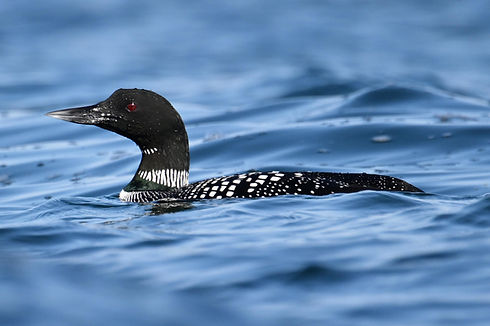
GREAT-NORTHERN DIVER
The Great Northern Diver (called the Common Loon in North America) is a large, powerful waterbird in the diver/loon family. It’s not a UK breeder — almost all individuals seen here are winter visitors or passage migrants that travel from Arctic breeding grounds in Iceland, Greenland and North America.
Most arrive September–November and remain through even into late May before migrating back north to breed.
Occasionally, birds do over-summer around Mull each year
Very rarely recorded inland on large inland water bodies on Mull, coastal sightings are far more typical and regular at the right times of year.
Winter counts around Mull can be an excess of 400-500 individuals, mostly counted in their communal roosts in the sea lochs.
Roughly 2,500–4,000 Great Northern Divers winter around UK waters each year, with higher numbers typically off western and northern Scotland.


SHORT-EARED OWL
Occurs on Mull as both a breeder and winter visitor. They are recorded most years on open moorland, rough grassland and marshy ground — especially where voles and small mammals are plentiful.
Breeding occurs in suitable areas, though numbers fluctuate with prey availability (field voles).
The last decade or so on Mull has proved to be relatively poor for SE Owls on Mull, with low breeding numbers and large areas of suitable moorland absent of this species. 2010–14 showed signs of having a good vole abundance as SEOs were in higher densities.

MINKE WHALE
Minke whales are the smallest baleen whale found in UK waters, rarely found over 7m in our waters, with females usually slightly longer than males. They are regular seasonal visitors, especially from April to October, with peak sightings in late summer. Both resident and migratory individuals are thought to use Hebridean waters.
Usually solitary, but if plentiful food then multiple can be seen in close proximity. They are known for curious behaviour — sometimes approach boats.
Food mainly consists of small fish like young Herring, Sandeels and young Mackerel.
Feeding activity often attracts seabirds, which can help spot them from shore or boat.


COMMON DOLPHIN
Common dolphins are regular visitors to the Hebrides,
most often seen from April - Oct, but sightings can occur year-round now.
Common dolphins have a distinctive creamy yellow hourglass pattern along the sides, with a dark grey back, tail and flippers and a cream-coloured belly.
Adult common dolphins measure between 1.7 to 2.4 metres long and weigh about 150 kg.
In Hebridean waters, common dolphins are usually found in groups of about 10 to 30 individuals, but can be seen in large, very active groups consisting of several hundred animals. Their leaping and splashing can sometimes be seen from several kilometres away and is often what gives away their presence.
BOTTLENOSE DOLPHIN
Scottish bottlenose dolphins are large, robust animals, reaching up to 3.9 metres in length and weighing around 400 kilograms when fully grown — noticeably larger than many bottlenose dolphins elsewhere in the world. They typically have a dark grey back, lighter grey flanks, and a pale, almost white underside.
Older individuals are often marked with scratches and scars, many of which are rake marks left by the teeth of other dolphins, usually the result of social interactions or competition.
Hebridean bottlenose dolphins live at the northernmost edge of their global range and can be seen throughout the region. They are most commonly found in inshore waters, especially around headlands and sheltered bays. The best places to spot them include Mull (particularly the Sound of Mull), Iona, Coll, Tiree, and Barra.


ORCA
Killer whales, also called Orca, are the largest dolphins in the world. They are easy to recognize because of their size, colour, and behaviour. Adults grow 5.5–9.8m long and can live up to 90 years. Females are usually smaller but live longer than males.
Their bodies are mostly jet black, with white patches on the lower jaw, sides, eyes, and belly. There is also a grey “saddle patch” behind the dorsal fin. Male orcas have the largest dorsal fin of any whale, up to 1.8 metres tall, while females and young have smaller, curved fins. All orcas have broad, paddle-shaped pectoral fins.
The last two remaining members of the west coast community are the mature bulls John Coe and Aquarius.
BASKING SHARK
The Basking Shark is the second-largest fish in the world, surpassed only by the whale shark. Fully grown individuals can reach up to 11m in length and weigh around 4,500 kilograms, with females typically slightly larger than males.
Basking sharks usually cruise slowly at speeds of 2.5–4 mph, cruising around the seas mouths open wide feeding on plankton. Generally poor stormy conditions and then calm weather brings plankton to the surface, allowing their distinctive dorsal fin to be spotted.
They are capable of sudden bursts of speed. This allows them to breach completely out of the water, a dramatic behaviour that is occasionally observed in the Hebrides. Scientists suggest that breaching may help to remove parasites from the skin, play a role in courtship displays, or produce loud splash sounds that may be used for communication with other sharks.

ATLANTIC PUFFIN
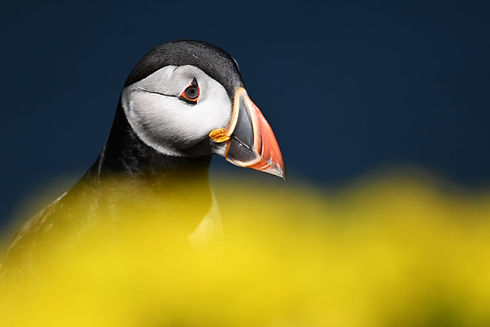
The Treshnish Isles, off the west coast of Mull, are one of the most important seabird breeding sites in Scotland and are especially famous for their large colonies of Atlantic puffins (Fratercula arctica).
-
Puffins return to the islands from late March to April
-
Eggs are laid in late April or May
-
Chicks (pufflings) hatch in June and are fed for around 6 weeks
-
Adults and chicks leave the islands by late July or August, spending the rest of the year in the open ocean
-
Puffins nest in burrows dug into grassy slopes or among rocky crevices
-
Each pair lays a single egg
-
Both parents share incubation and chick-rearing duties
-
Islands such as Lunga support thousands of breeding pairs
-
The surrounding waters provide rich feeding grounds with small fish such as sandeels, which are vital for chick survival
-
The islands are designated as a Special Protection Area (SPA) due to their seabird importance

MARSH FRITILLARY
Status
-
The Marsh Fritillary is one of the UK’s most threatened butterflies
-
Mull is an important stronghold for the species in Scotland
-
It is legally protected and a key conservation species
Habitat on Mull
-
Found in damp grassland, moorland edges, and coastal meadows
-
Requires areas with:
-
Abundant devil’s-bit scabious (the caterpillar’s main food plant)
-
A mix of short and tall vegetation
-
-
Traditional low-intensity grazing on Mull helps maintain suitable habitat
Life Cycle
-
Adults fly from late May to early July
-
Females lay eggs in clusters on devil’s-bit scabious
-
Caterpillars live communally in silk webs during late summer
-
The species overwinters as caterpillars before pupating in spring
Appearance
-
Medium-sized butterfly
-
Bright orange wings with black chequered markings
-
Females are usually larger and darker than males
CUCKOO
Status
-
The cuckoo is a migratory bird, arriving in Mull each spring from Africa.
-
Famous for its distinctive “cuck-oo” call, it is a familiar but secretive visitor across the island.
-
Cuckoo populations in the UK have declined drastically in recent decades, making sightings increasingly special here on Mull.
Habitat
-
Prefers open woodland, moorland edges, and farmland with scattered trees or shrubs.
-
Often heard before seen, as it sings from exposed perches.
-
Feeds mainly in grassland and hedgerows, where insects are abundant.
Breeding and Behaviour
-
The cuckoo is a brood parasite:
-
Females lay eggs in the nests of other birds, such as meadow pipits and reed warblers.
-
The host birds then raise the cuckoo chick, often at the expense of their own young.
-
-
The species is secretive and rarely seen on the nest, making its calls the easiest way to detect it.
-
Males are territorial and use their distinctive call to attract females and defend territory.

CHEQUERED SKIPPER
-
The Chequered Skipper is one of the UK’s rarest butterflies
-
Mull is becoming a real stronghold for the species despite only being discovered here in 2022!
-
It is legally protected and a major conservation priority.
-
Found in open, sunny woodland edges, glades, and nearby grassland especially containing Purple moor-grass.
-
Traditional woodland management helps maintain suitable conditions
Appearance
-
Small, compact butterfly
-
Dark brown wings with bold yellow chequered markings
-
Fast, low flight close to vegetation


SLENDER SCOTCH BURNET MOTH
Status
-
The Slender Scotch Burnet is a rare day-flying moth in the UK.
-
Endemic to Mull and Ulva!
-
It is legally protected due to its restricted range and vulnerability to habitat loss.
Habitat
-
Prefers sunny, flower-rich grasslands and coastal meadows.
-
Requires areas with plentiful nectar sources for adults and restharrow (Ononis repens) as the larval food plant.
-
The moth thrives in well-managed, lightly grazed grassland, where tussocks and open ground coexist.
Appearance
-
Small, delicate moth with narrow forewings.
-
Forewings are shiny black or dark metallic blue with red spots, while the hindwings are red with a black border.
-
Flies in bright daylight, often seen basking on flowers.
Life Cycle
-
Adults fly from late May to July, depending on the weather.
-
Females lay eggs on the larval food plant (restharrow).
-
Caterpillars feed on the leaves and overwinter before pupating in spring.