WHEN & WHY TO VISIT MULL FOR WILDLIFE?
Seasonal timeline for visiting the island for wildlife
The Isle of Mull offers outstanding wildlife viewing throughout the year, but the best time to visit depends on what you hope to see

SPRING
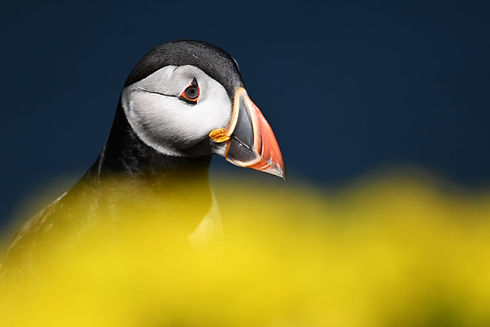
Spring (April–May) is one of the most rewarding seasons. Migratory birds return, wildflowers bloom, and seabirds begin nesting on cliffs and offshore islands. Puffins, Guillemots and Razorbills are active into May especially with the wildflowers in bloom, while White-tailed and Golden Eagles are busy parents after the incubation period. The weather is generally fresh and clear, and midges are usually minimal.
Head into the woodlands of Mull, especially are oak woodlands one morning and listen out for birdsong. Into early May our Wood Warblers, Redstarts and Tree Pipits should be in voice.
FIELD NOTE - Eagles will be incubating eggs during late March and through April, so there will be a decrease of sightings in certain territories around the island due to this.

SUMMER
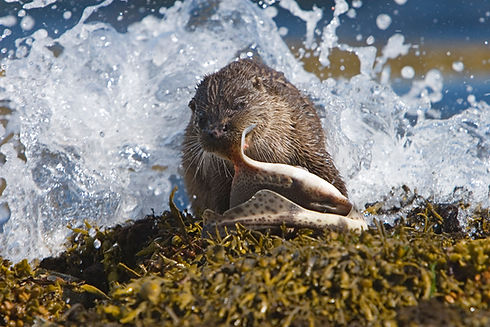
Summer (June–August) is great for marine wildlife. This is the prime season for spotting whales, dolphins and porpoises on boat trips, with minke whales and common dolphins more frequently seen. Basking sharks are very sporadic, but July and August have tended to be the most productive months in recent years. Otters continue to be active along the coastline, with activity dictated by the tides along with food availability inland.
Eagle parents are busy delivering food into eyries, and July can provide the first fledglings showing on the wing!
Hen Harriers are also busy parents, hunting for prey on open moors.
Midges can be noticeable, particularly on still, damp evenings.
SEABIRDS - They disperse their breeding ground by late July/early August and head out to sea feeding up ready to leave for the winter. The Puffins tend to go well offshore straight away, with occasional sightings of young Puffins into early autumn. Whilst the other seabird species can be seen later on into October.
FIELD NOTE - The island endemic Slender Scotch Burnett Moth can be seen in early June on parts of Mull and Ulva!


AUTUMN
Autumn (September–October) brings quieter landscapes and dramatic scenery. Red deer are more visible during the rut, and eagles remain active as young birds learn to hunt.
OTTERS - When the seas are warm still from the summer and food is plentiful, Otters increase their coastal activity and its when we occasionally get encounters with the youngest cubs, born over the summer. The softer light can offer some magical morning and evening views.
FIELD NOTE - The Red Deer rut is dictated by when the females come into season. This can be anytime from late Autumn to the end of October, it varies every year. Late Sept and into Oct has seen the peak of the activity in recent years. A lot of the fighting takes place at night here on Mull.

WINTER
Winter (November–March) is a more challenging but rewarding time for dedicated wildlife watchers. Eagles and Otters can still be seen year-round, wintering birds arrive, and the moody light and snow-dusted hills create striking conditions for photography.
EAGLES - Both Golden and White-tailed Eagles will be on eggs in early spring so the birds busy this season preparing for breeding. Nest building, courtship rituals and finding enough food with less daylight hours.
ADDERS - These beautiful snakes emerge from brumation in February / March.